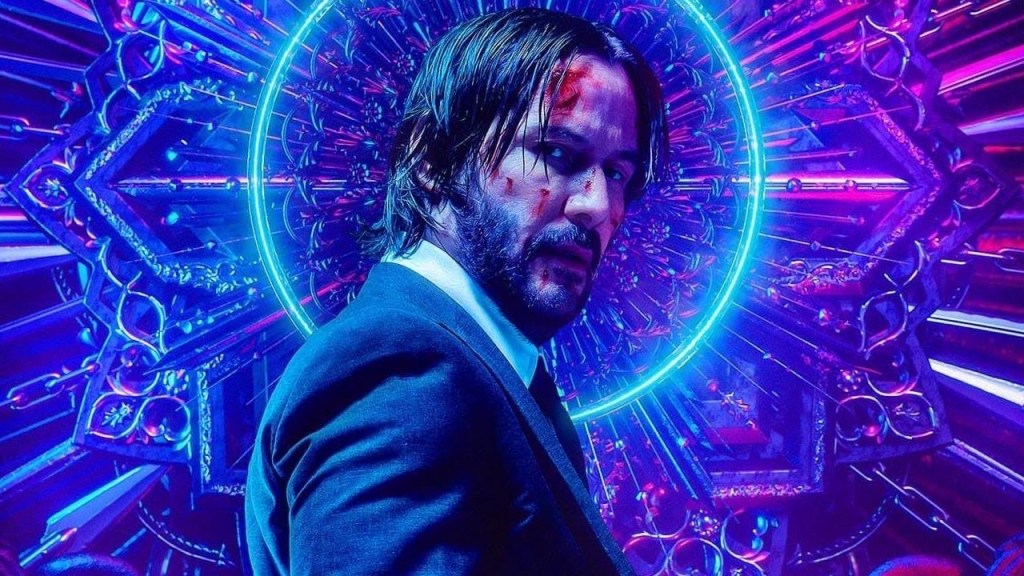
The John Wick franchise is a modern classic, an instant icon, a redefinition of the action genre. The first of the three films (to date) introduces us to a man whose very name instills fear. Though in every sense human, there is a quality of the mythical about him, even down to his having successfully carried out an “impossible task” in the manner of a hero from Greek mythology and legend. This quality is enhanced when Viggo Tarasov informs his son, “John wasn’t exactly the Boogeyman. He was the one you sent to kill the fucking Boogeyman.”
This is how John Wick should be read, as a Greek myth told modern. Like many a Greek hero, John Wick must participate in a tragedy of fate and vengeance.
Of course, the world we inhabit today is vastly different to that of Oedipus and Orestes. There is never any doubt, as one reads Sophocles’ Oedipus Rex, that, despite all his efforts and wisdom, the king of Thebes will fulfil the fate predestined for him. In fact, as the play opens, he has already done so – having already murdered his father and married his mother. That fate is inescapable was simply accepted by the Greeks in Sophocles’ audience so the playwright makes Oedipus’ dawning realisation of the truth of his actions the focus of the play.
Any retelling opens up possibilities of different outcomes. However unlikely, there must always be a glimmer of hope that the story will somehow avoid the tragic outcome. By opening the play after all the significant events have already occurred any such hope is made impossible; we are left with a sense of the inevitability of fate as we watch Oedipus come to terms with the consequences.
To our modern sense of individual free choice, any notion of fate is offensive. Today, we much prefer the idea of Destiny, which allows us some say in the way our lives turn out. So, why is John Wick not a tale of one man’s search for his destiny? After all, at the start of the first film, John has “got out” of his previous life and found happiness with a woman he clearly loves.
Yet, even after five years of retirement, only John himself seems convinced he is not the man he once was. When Jimmy the cop arrives at John’s door, due to complaints of noise resulting from Wick’s wiping out Viggo’s hit squad, his only question is “You, uh, working again?” Abby, the bar staff at The Continental, when John informs her he is retired, responds, “Not if you’re drinking here, you’re not.”
True, John has been out of the life long enough for Iosef Tarasov not to recognise who he is dealing with but, upon being told by his father, it is clear that he knows the Wick legend, even if it isn’t real enough for him to realise the extent of his foolhardiness at suggesting he could make right by finishing what he’d started.
What is significant about this time out is that it hasn’t, as one might expect, dulled John’s instincts and reactions. As mentioned, he takes out Viggo’s hit squad with no indication he’s actually exerting himself. If we were to see John Wick as merely human, this would be preposterous – as would the whole film, quite frankly.
If, on the other hand, we recognise that John Wick inhabits that world of mythic heroes, then, like the Ancient Greeks before us, we can acknowledge his humanity, while understanding that he is more so. Not merely human, indeed, but heroic.
John Wick’s status as mythic hero may serve to explain, to our satisfaction, how he is able to keep going despite the relentlessness of the action, how he is always ready to respond appropriately to the next threat. It also makes him subject to fate, deprived of the freedom to choose his own destiny.
When John left the life, it was not because he fell in love and chose to marry and live peacefully, however much he might believe he made his choices freely. This part of his life was fated every bit as much as the rest.
It was John’s fate to play the role of Mafia hitman, a role which provided all the preparation he could need for the real role he was predestined for. When this preparation stage was complete, fate presented him with the means to change direction, the means by which this automaton of a man could learn to feel love and care for others. Fate gave him Helen.
This period of peace and love was necessary, if John Wick the Boogeyman was to become the hero he was fated to be. For all its necessity, however, it could never last too long or John would, indeed, have begun to lose those instincts and responses so carefully moulded in his previous life. So, Helen was taken away.
But, to lose a loved one through illness leads only to grief and, possibly, despair. John certainly seems overcome with the futility of life at the beginning of the first film.
Something was needed to drive John in the direction he was always intended to go. And fate had just the right fool lined up at the right time to provide the impetus needed to put the hero on the right path. Fate gave him Iosef Tarasov.
As we well know from tales of heroes told by the Greeks, it isn’t necessarily the hero’s role to be happy – Oedipus ended up plucking out his own eyes with his mother/wife’s hair pins – only that he fulfil the task set before him. To do so does not guarantee peace and happiness – indeed, there rarely ever is a reward to be earned except immortality. Not of the undying kind enjoyed by the gods. The only form of immortality available to we humans is to be spoken of down through the ages.
John Wick, by embracing his fate, ensures his name will forever instil fear in those for whom he decides to come. John Wick is immortal. John Wick is today’s hero.
 Mark with an X
Leave a comment