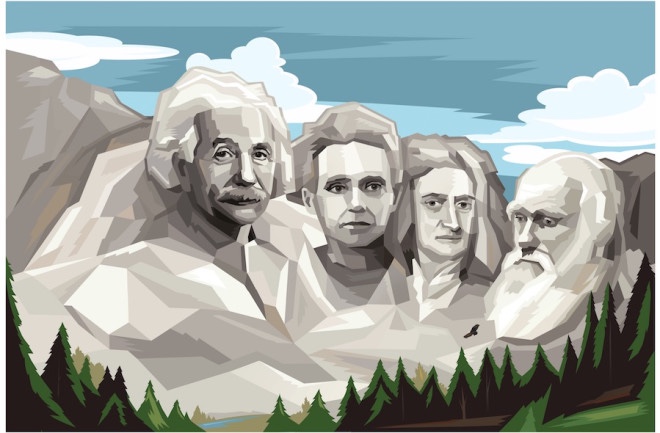
In these days of the pandemic, the scientist has finally attained the status always sought. With the development of the vaccine, in such a short space of time, we have our superhero. It may still lag behind in the style stakes, but science has shown itself as the team which assembled to defeat the invader.
However, there is a significant difference between The Avengers and The Scientists – the former were held to account for their actions in a way the latter never are. For this reason, among others, Martin Scorsese was so wrong when he likened Superhero movies to fairground rides.
Over the space of three days, science killed 120,000 people in August of 1945. This figure does not include those who died later of the fallout of dropping atomic bombs on human beings – a figure which may be as high as 210,000.
Those two bombs were built deliberately by scientists, during wartime, so with no excuse regarding the purpose to which they would be put.
This is what happens when human beings try to live by objectivity, the very definition of which requires the quashing of all those qualities that make us human. No sane person would build such a weapon of mass destruction, unless under the delusion of scientific objectivity.
The Avengers acted out of their belief that they were working for the good of humanity. But innocent people died! And there were consequences to be faced. Not so for The Scientists.
Nor will there be any responsibility accepted by those scientists who worked on the vaccine. They saved us from the pandemic, after all. All hail the mighty scientist!
A cursory visit to historyofvaccines.org confronts the surfer with: “Vaccine development is a long, complex process, often lasting 10-15 years”. Clearly we couldn’t wait so long for a vaccine to save us from the pandemic. Hence, the scientist as superhero! Imagine achieving within a year what normally takes 10-15 years! Gosh!
What nobody seems to care about is that we are delivering an untested vaccine to millions of people. The scientists don’t care because, like those scientists at Los Alamos, they have achieved their objective goal. But objectivity, by definition, doesn’t take the human into account. 210,000 lives may end up looking like a blip on the landscape when the effects of an untried vaccine begin to kick in.
This writer is not an anti-vaxxer. If we had a tried and tested vaccine against the pandemic, there would be no qualms. But The Scientists know that this vaccine has not undergone the rigorous testing that is, or was, normal. The Scientist is only concerned with finally achieving a public profile that puts them up there with The Avengers.
There may well be no unforeseen side effects of this particular vaccine. Let’s hope not! However, a precedent has been set. Will future vaccines undergo 15 years of testing? Why would they after this one was developed and rolled out in under a year? Scientists can now do the work, minus fifteen years of cost. Cut-price anything never produces quality!
Michael Crichton warned, following in the illustrious footsteps of Mary Shelley, of the dangers of science going unchecked, in his novel Jurassic Park. In this popular read, there are an abundance of scientists, each representing some aspect of the positives and/or negatives of the scientist’s character. The three characters worth consideration are: Ian Malcolm, the Chaos Mathematician; Alan Grant, the palaeontologist; Henry Wu, the biotechnologist.
Crichton sets up a dichotomy between Grant and Wu – the former a dinosaur expert; the latter not even aware of what dinosaurs he is creating in his lab. To Grant, dinosaurs are a wonder of nature; to Wu they are a numbered lab experiment. Grant works out in the field, digging in the earth, interacting with the money only in so far as he needs the financial support (grant) of benefactors. Wu works entirely within the artificial world of the lab, never having to worry about where the money is coming from. For Grant, science is about discovery, understanding and explaining; for Wu, science is about doing.
Another major distinction between these two scientists is Grant’s relationship with Ellie Sattler. Unlike the film, this relationship is purely professional, but it serves to show that Alan Grant is human and capable of interacting on a personal level with others. And he even likes children!
Henry Wu, on the other hand, has nothing in his life but the science.
Obviously, we are supposed to see that Grant epitomises ‘good’ science and Wu the ‘bad’. Despite his white coat, Wu is the black hat. Wu is the kind of scientist who builds bombs, knowing full well that hundreds of thousands are going to die in sacrifice on the altar of science. The doing, irrespective of the costs!
So where does Ian Malcolm fit in?
Mathematics is the language of science and Malcolm is a mathematician. He, in a sense, makes science possible. Yet Malcolm is one of the “new generation of mathematicians” who is “openly interested” in how the “real world works”. Malcolm is never in any doubt that Jurassic Park will fail because, fundamentally, it goes against all that is natural. Hence his famous dictum: Life finds a way. Malcolm hasn’t allowed his brilliance in his specialised ‘field’ (the closest many scientist ever get) blind him to the reality of the world in which he works and which he seeks to explain.
Malcolm shows us that science can be abstract, that it has a way of seeing the world few of us non-scientists will ever fully understand – which is why, while he might claim not to want to sound philosophical, he undoubtedly does – but, nevertheless, can still be as cool as Jeff Goldblum, because, ultimately, Malcolm’s goal is to save us from ourselves. Ian Malcolm and Alan Grant, together, show us that science must remain human; that it’s methods are merely the tools of the trade – not a way of life, not a philosophy, and, certainly, not a religion.
Maybe those scientists who worked on the vaccine have saved us from something almost as bad as ourselves. And maybe, this time, time was such a factor that it was necessary to let them get on with it. It remains to be seen if Crichton’s warning of biotechnology going unchecked will have the disastrous results he predicts. But the precedent has been set. And, under law, precedent counts.


Leave a Reply