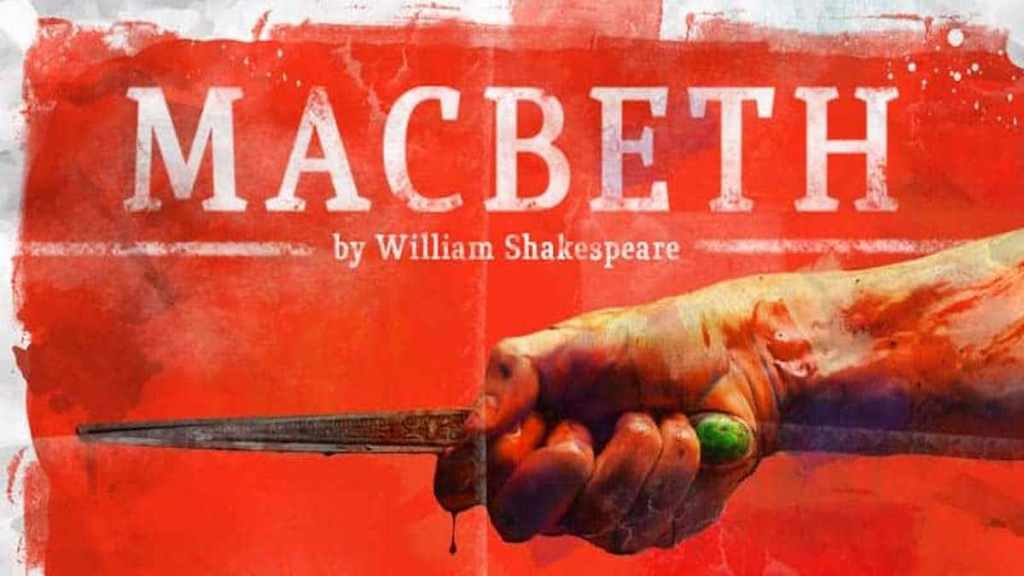
Despite being one of the most heinous villains in the history of the theatre, we are supposed to retain a modicum of sympathy for Macbeth as he meets his fate at the hands of Macduff. Shakespeare constructed the play in such a way that we are not without some sympathy, even if only because we know the turmoil Macbeth has gone through; we gain such insight to his interior life, we cannot but understand his actions – however horrifying they may be. Shakespeare, as he is wont to do, forces us to not only see something we might not want to see, but understand it, as well. This is, after all, why we still force ourselves to engage with his texts; he still has the power to shift us out of our comfort zones and confront us with a world we might prefer to pretend doesn’t exist.
And, indeed, the world of the play never did exist. The Macbeth portrayed is not the historical Macbeth. Though he did kill King Duncan to become king, he did so in battle, which, for the times, makes it more honourable – or, at least, more acceptable. After fourteen years of efficient and equable governance, King Macbeth was killed in battle by Malcolm, Duncan’s son.
Shakespeare’s plays are classified as History only because he dealt with historical figures, not because he gives an accurate account of events.
Though Shakespeare worked from a source – Holinshed’s *Chronicles* – his main purpose was never historical accuracy. It is likely that his first priority was writing an entertaining play. However difficult his language may be today, Shakespeare – and Ben Jonson and Christopher Marlowe and Thomas Kyd and Thomas Dekker – were writers of popular entertainment, frequented by the literate and the illiterate alike. As such, it was necessary to write entertainment and lots of it. No wonder, then, that Shakespeare had several plays first performed in the same year. In 1605, the year Macbeth was first performed, he also churned out King Lear; the year before he’d had Measure for Measure and Othello make their first appearance on stage. We can be sure, then, that Shakespeare, while writing to maintain his popularity, was not writing the greatest plays ever written. He was writing plays to attract an audience; it is only later generations that decided his work to be the pinnacle of the dramatic art. This is not to say that Shakespeare wasn’t recognised as a playwright of quality in his day; only that that quality came out of his need to entertain rather than because he set himself the task of writing great literature.
Those who might believe that Shakespeare didn’t write his plays are unable to face the fact that this man without a university education not only wrote some of the greatest plays ever written but, also, that he did so as an equivalent of daytime TV.
Hence, we have a Macbeth who is designed to entertain – just as modern horror movies are meant as entertainment. But, this being Shakespeare, there is far more going on than mere entertainment. For one thing, we are given far more insight into Macbeth’s personal motivation than any other character in Jacobean literature. Unlike any other major character, we know what Macbeth is thinking because he tells us. Whether we should take him at his word – or his thought – is another matter. After all, as he did at the beginning of Romeo and Juliet – Shakespeare tells us, at the beginning of the play, what is going to happen – that Macbeth will ultimately go unrewarded for his treachery. Just as Romeo and Juliet would not survive their disobedience of the social order, so Macbeth would fail in his attempt to usurp the natural (or even Divine) order. As they spark Macbeth’s ambition with one prophecy, so the Weird Sisters forewarn the audience that the coming upheaval will be temporary with another; that Banquo’s progeny will bring the world back into alignment with all that is natural and holy.
It is the action – and, more specifically, the examination of Macbeth – that constitutes the purpose of the play.
Harold Bloom famously claimed that Shakespeare invented the human – by which he means our sense of individuality. But is it really true to say that Macbeth is any more human than Sophocles’ Oedipus? That Juliet is any more human than Antigone? Shakespeare’s characters might lay a claim to being more recognisably individual to a modern 21st century audience but hardly more human.
Bloom tells us that “Shakespeare rather dreadfully sees to it that *we are* Macbeth; our identity with him is involuntary but inescapable.” Further, “[i]f we are compelled to identify with Macbeth, and he appalls us (and himself), then we ourselves must be fearsome also.” I won’t read into a mere two quotes what Bloom wants us to understand about the human, I just think that what really compels us about Macbeth is how he, as an individual, strives to work out what is the best course of action. If the human is so easily compelled to do something – even if only to see ourselves in a fictional character – then maybe the human isn’t as fearsome as Bloom may wish. Or, maybe we are, but not as Bloom would wish. If we are so easily manipulated that we identify with Macbeth so involuntarily, then what is so great about the human?
What really fascinates about Macbeth is his working out the solution to his situation. It matters not how many innocents he kills along the way; it only matters that he strives to do something Oedipus could never do – he seeks his own personal best solution, for his own sake – not for the sake of a polis or a greater good. Macbeth should be who he is; yet he fails! His strivings, however, are inspirational.
Not that we all should strive to kill a king and a child and mother and whoever else gets in our way! Wouldn’t that be an oh, so literal reading of the play? The problem with Bloom is that he never thinks beyond the play. The play’s the thing, literally.
If this were actually so, would we – the groundlings who still go to watch Shakespeare – find anything truly meaningful? It is doubtful that we continue to watch and read Macbeth because we want to feel ‘fearsome’. Even if the play forces us to face up to sides of our human nature we might not wish to acknowledge, it isn’t enough to make Macbeth the powerhouse it is.The murder and mayhem are what make the play entertaining, Macbeth is what makes the play relevant and ageless. Macbeth shows us the individual in a way we rarely see – and probably had never seen before. This is what makes this most horrific of plays so eternally attractive.
 Mark with an X
Leave a comment