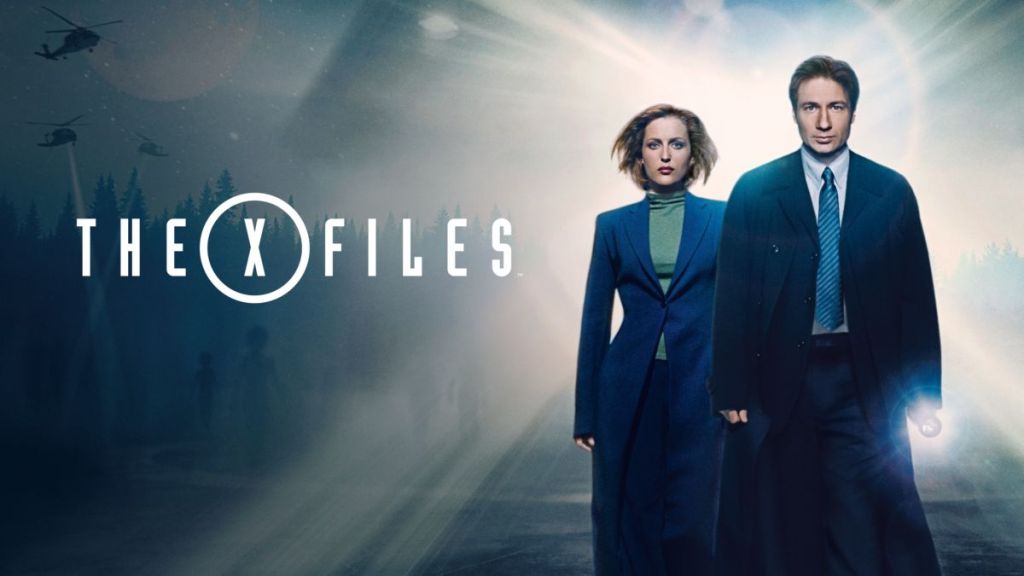
According to IMDb, The X-Files first aired in the U.K. on 19th September, 1994 – which is pretty much half a lifetime ago. No other TV show has stuck in the mind to anywhere near the extent The X-Files has. Why should this be so? What is it about this particular TV show that has made it such an integral part of one’s life?
The answer to this question must contain multitudes. There cannot be one simple answer.
First and foremost, I would suggest, is the storytelling. There is no doubt that, at its very best, the writing of this show sets the standard to which everyone else must aspire. Sure, there have been other great TV Shows – from Babylon 5 to The Sopranos – but, not only do they owe their very existence to Chris Carter’s show, they took whole seasons to do what The X-Files did on a weekly basis. Of course, this is a controversial statement – but one that stands the test of time!
A list of the greatest episodes would be long – and who enjoys reading lists? A single example will suffice. Season 6’s ‘Triangle‘ encapsulates all that this show stands for. It is experimental, it is emotional, it is ambiguous, it is tense, it is intertextual, it is – oops! A list!
It goes without saying that the relationship at the heart of the show – that between FBI agents Fox Mulder and Dana Scully – is just as essential to the enduring impact of The X-Files. Who knew, in the early days, that this was not just going to be another example of misogynistic TV, with the little woman devotedly following her man wherever he might lead? Who could have predicted that, in fact, the story arc of the female character would be far and away more interesting than that of the male lead? Nevertheless, it is the two together and the development of their relationship over the years which helps to make this most far-out of TV shows human and relatable. And, despite some early teething problems, Gillian Anderson and David Duchovny are just dream casting! While there always existed a smidgeon of doubt over Duchony’s emotional range, Gillian Anderson is simply one of the greatest actors ever to grace screen or stage.
To his credit, one of the reasons we love Mulder is Duchovny’s ability to convey his obsession. A character willing to go to any lengths, make any sacrifice (apart from one), give up a glittering career, all in the name of pursuing his goal, makes for riveting TV. Especially as the character is essentially a good guy. In shows like The Sopranos, it is expected of the characters to behave in, let us say, less than sociable ways. But a character for whom nothing else matters beyond his search for the Truth? A man willing to put himself (though not others) through Hell to achieve his goal? To have such a selfish character lead a major TV show must be one of the riskier moves The X-Files ever made. Tony Soprano and Walter White owe a huge debt to Mulder.
It is such a simple thing to have the two main characters hold opposing points of view. Somewhat radical for the time is that it is the male character who is the believing, emotional heart of the show, while the female character is the scientific, logical(?) upholder of the rational need for evidence. Of course, both are F.B.I. agents so it is an important moment when, in the Pilot, Mulder assures Scully that he is not crazy, that he has “the same doubts you do”. It is this need for evidence which gives the lie to Mulder’s claim of wanting to believe. Belief requires no evidence. The F.B.I. does. It is such a human contradiction – to claim one thing while pursuing another. It goes to the heart of Mulder’s character, though, that he never fully understands what it is that he is about. All the more reason to have a partner like Dana Scully. How lost would Mulder get if not for her constantly pulling him back from the abyss he all too often seems willing to leap into? The dynamic between these two characters is what we watch The X-Files for – the MotW and the Conspiracy are just icing on the cake.
The thread running through the whole of The X-Files is, of course, the Conspiracy. It cannot be doubted that this aspect of the show, as, probably, almost everything else, was developed as they went along. Consequently, it is of no surprise that it eventually became such an unwieldy thing. It did, however, have its moments! For one thing, what would the The X-Files be if not for that air of paranoia pervading even those episodes not overtly dealing with Government-level cover-ups?
It may not be entirely unfair to say that the paranoia is one of the (many) aspects of The X-Files which is noticeably out-dated, that it no longer signifies the modern attitude towards Government. Yet, it is not just a way to carbon-date the series. It is also a reminder of how we once believed Governments could function, that they could be organised enough to conspire, that they were an institution we needed to keep in check. The X-Files is a constant reminder of our democratic duty to remain vigilant of the machinations of Government and not simply accept at face-value the blandishments of talking heads.
The Devil’s greatest lie might be to convince us that he no longer exists; the Government’s is that “Nothing Important Happened Today”.
Ultimately, it is not any one single aspect of the The X-Files which generates undying love. Only when we are able to love the whole, warts and all, can we be said to truly love at all. Undoubtedly, The X-Files would make a more satisfying whole if it didn’t contain episodes like “Badlaa” or “Teliko”, “Teso Dos Bichos” or “El Mundo Gira”. Yet, it does! These episodes will never be loved in and of themselves – just as the moon will never shine for itself – but – like moonlight – they enable us to see what otherwise we might not and, for that, they are a valuable part of the whole.
 Mark with an X
Leave a comment