It is fitting to read Robert Hayden’s poem, ‘Those Winter Sundays‘, as the expression of belated gratitude for a father who, unable to speak his love, demonstrated it in practical ways.
As a boy, the narrator knows nothing of “love’s austere and lonely offices”. Only as he has become a man, likely fulfilling comparable offices for his own off-spring, is he able to recognise the many ways his father expressed his love.
The father is not, despite being the lighter of the fire which warms the house, a warm, friendly figure. There is a distance to him, both in his being away at work on weekdays, but emotionally also. The lighting of the fire, even on a Sunday morning, is not just a duty – it is the only way this father has of showing the warmth of his love.
That said, it is very possible that the father was one of the unskilled and unlearned, who yet feel that life hasn’t treated them as they feel they deserve. This belief hasn’t diminished his love and responsibility to his family, but the son must rise, “fearing the chronic angers of that house”. Whatever the cause of this anger, it is a feeling which permeates the whole house, every bit as much as the heat from the fire, and has persisted over a long period of time.
There is little wonder, then, that the son feels indifferent to the father – especially if he has learned, from experience, that to get too close is to risk stoking the fire of his ire.
This is the pain at the heart of this poem – that this decent man, who knows, accepts and performs his duty towards his family to the fullest extent, feels so badly used by life that a rage burns within, keeping at a distance those who should be close, discouraging their own expression of love and appreciation. This is a terrible cycle and must, ultimately, destroy any family.
But there is a positive note to be found in this poem. The narrator may, as a child, have been unaware of “love’s austere and lonely offices”, but the poem itself is evidence of this no longer being so.
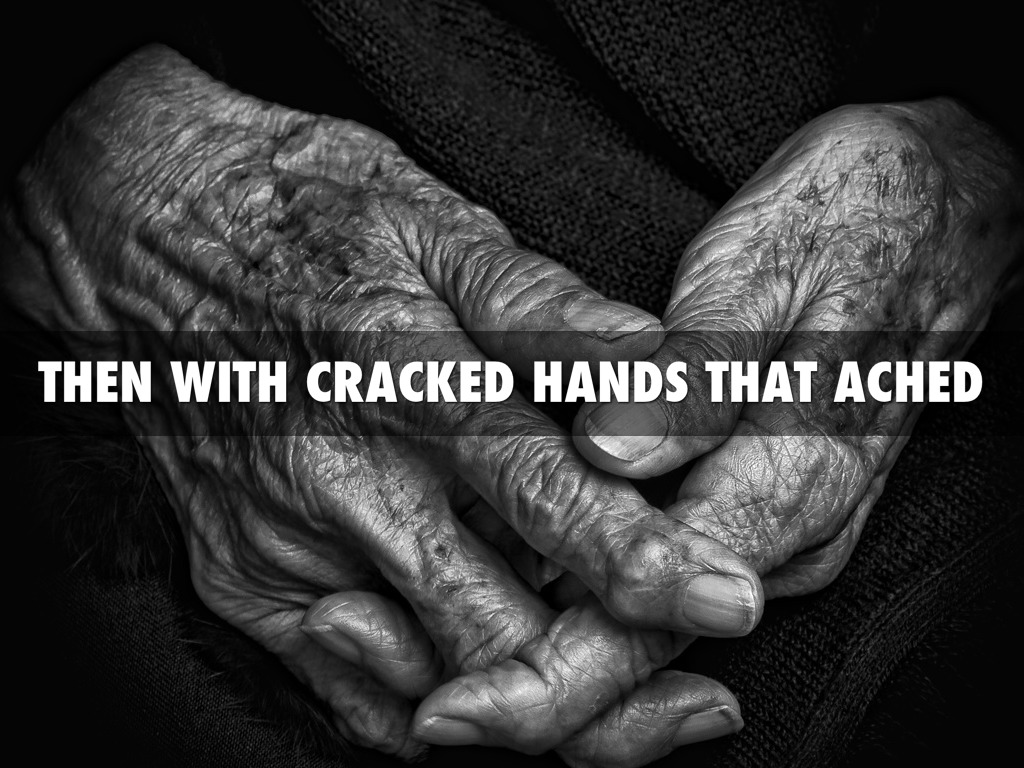
His father, already showing signs of the ravages of a hard life in his “cracked hands that ached from labor”, is very probably dead at the time of the poem’s reminiscences. That is a relationship which will never be mended. Yet an important lesson has been learned and there is every likelihood that the mistakes of the past will be avoided in the future. If those who don’t know history are doomed to repeat it, the implication is that those who do know history, as does the poem’s narrator, will be able to do things differently.
 Mark with an X
Leave a comment