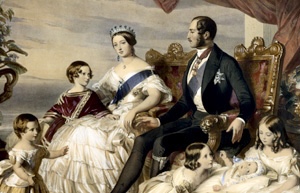
Any look back at the Nineteenth Century must be prepared to reconcile dualities. Not that the double nature of the age will ever be pacified; rather, it is the viewer who must find a way to accept the two sides of the spinning coin – the Heads and the Tails together.
In a century that saw the birth of modern science, that produced probably the most significant of all scientific theories, the warning had already been pronounced by an 18 year old girl with little formal education. Forty-one years before Darwin published On the Origin of Species, Mary Wollstonecraft Shelley warned of the danger of scientists taking – or being given – too much power with too little oversight. Frankenstein, or the Modern Prometheus is not anti-science. In the Nineteenth Century, one could explore ideas without being immediately labelled anti- or bigoted and Shelley explores the consequences of the fledgling science being pursued for its own ends, by ‘men’ with little awareness of the future’s shadow.
Maybe we shouldn’t be overly surprised at Shelley being the voice of reason in this age of unrestrained exploration and expansion. After all, the man who formulated the theory of evolution by means of natural selection was no scientist. In a professional sense, Charles Darwin wasn’t really anything. Just a man with an infinite amount of patience and supreme insight – who spent eight years studying barnacles! Only in the Nineteenth Century could the most boring man on the planet make the most glorious discovery that would go on to explain not only how we got here but, also, why?
One can hardly deny it must have been an exciting time to be alive, those hundred years of the Nineteenth Century. Despite the internet and the ready availability of self-publishing, one finds it difficult to imagine an 18 year old of little education producing a timeless classic as did Mary Shelley just over two hundred years ago. And, for all the lauding of Darwin as the foundation stone of the modern demand to ‘follow the science’ and rely on nothing but reason, can you imagine the failed medical student getting so much of a toe-hold in the door of modern, academically-specialised science?
It isn’t really just the Nineteenth Century that displays a keen-edged duality. Just as any self-respecting Catholic must constantly ask whether the church today is what Jesus had in mind, scientists today should consider whether Darwin would find much to follow in today’s science. A mere twelve years after the publication of the revolutionary Origin of Species, Darwin published The Descent of Man, and Selection in Relation to Sex, followed the following year (1872) by The Expression of the Emotions in Man and Animals. In other words, Darwin, whether he read Shelley’s novel or not, was well aware that the purpose of science is to improve our understanding of ourselves and not merely a goal in and of itself.
Not unsurprisingly, just as Darwin was providing us with the book that would become the closest science is ever likely to get to a sacred text, that other volume, which had served the purpose for so long, was coming under historical-critical scrutiny. No longer, in the spirit of the age, was the ‘Good Book’ to be accepted on faith. (Now there’s a duality, if ever you wanted one.) Especially as ‘death’ was such a fascination for Victorians. In one sense, this is understandable. With typical human arrogance, as scientific knowledge blossomed, it must have been relatively easy to believe that the greatest mystery of all would soon be explained. This is, as early as 1818, the ultimate goal of Victor Frankenstein. As he notes in Chapter 4, “with how many things are we on the brink of becoming acquainted”? It is the end of this quote that chills, that expresses the warning that lies at the heart of this greatest of novels: “if cowardice or carelessness did not restrain our enquiries”.
And of what was there to be afraid if that Being, who had always occupied the position of overseer, could be shown to be little more than the creation of writers in much the same way as Victor Frankenstein himself?
Yet, at the same time, the ghost story was such a popular form of entertainment. At the very same moment when the faith that told us there was a life-after-death was waning, the afterlife became central to feeling cosy and secure on a Christmas night. Of course, we know that those gas lights, that have become such a modern motif, had a lot to do with it, but they don’t explain why the dead became such photographic stars
Either the Victorians were so scared of death they had to normalise it, to the extent of including it in their family portraits, or they were able to accept death as an inevitable aspect of life and had no need to hide from it. Either way, yet another duality
Of course, it isn’t as if the Victorians were unaware of duality. Not only was their century replete with accidental duality, they consciously contributed a few to the mix – the ‘othering’ of the “inferior” races (so, there’s two already – us vs. them and superior vs. inferior); Madonna and Whore; Old Rich vs. Nouveau Riche, to name a few. Nineteenth Century society was a mess of duality!
Yet, despite the mass of contradiction, look at what was achieved during this most dynamic of centuries. Casting judgement aside, for a moment, one small island, made up of three distinct nations, grew to earn its name of Great Britain. There is no condoning some of the methods adopted in the achieving of this status, yet we can say they were no different than the methods employed throughout history by those who would be great. Let’s be honest, we can discuss the rise of the Roman Empire dispassionately simply because it was so long ago. We might have straight roads and viaducts today thanks to the technical prowess of Rome but we don’t feel any political, cultural or societal consequences from their methods of conquest. The British Empire did nothing more nor less than the Roman but, because we are still living with the consequences of that last great empire, we justly vilify those age-old methods. Strangely, another duality.
It is at this juncture that I’d like to come to my point (finally).
But first, I’ll be honest and admit that I am not too quick to vilify the Victorians. In fact, I’d go so far as to say that the Nineteenth Century was the last, great century. I make this claim based on all that I have so far said about the achievements and pinnacles reached during that period we identify by the name of a female monarch (and isn’t that yet another duality?).
There is a great deal about the Nineteenth Century that we find hard to accept today – there are whole peoples who still feel the injustices perpetrated over two hundred years ago and hold the ancestors of those once-upon-a-time British responsible still. Yet, I would still contend that the Victorians left the world a better place after their passing. It isn’t their fault that, like Victor Frankenstein, we have gone looking for life among the dead.They lived and thrived off their contradictions, their dualities, whereas we live in fear of ours. They were lucky in so far as they lived in a world in which there were wonders yet to be discovered and they dedicated themselves to “becoming acquainted” with them. We live in a world destroyed by our lack of that same sense of wonder, by our unwillingness to recognise and accept that it wasn’t just the Victorians who embodied duality – it is us, we other Victorians, we ourselves who are the embodiment of duality.
Am I who I am by nature or nurture? Am I mind and body, masculine and feminine, divine and mundane? Yes, of course I am.If those Victorians can teach us anything it is that greatness comes from the midst of duality, the confusion of being human. It certainly doesn’t come from hiding from ourselves.
If your way of being can only be at the expense of another’s, you are anti-Victorian. If you must put down another in order to raise yourself, you are anti-Victorian.
You might argue that this is precisely what the Victorians did and, of course, you’d be right. But always remember, the past is a strange country and they do things differently there. This is not to condone Empire. Rather, it is to acknowledge the spirit that achieved Empire – the human spirit as once was.
Unfortunately, all that spirit ever really bequeathed us is this age of apathy, an age in which who one has sex with is of burning importance, how one perceives oneself is of such vital importance we tear down monuments dedicated to our once-upon-a-time greatness
Once we were giants! Now, we are gibbering gerbils!
Oh, to be Victorian!
 Mark with an X
Leave a comment