Imagine walking into a town only to find that your arrival brings the population to the grand total of 1!
How long would it take to have you pressing the emergency button, crying for help?
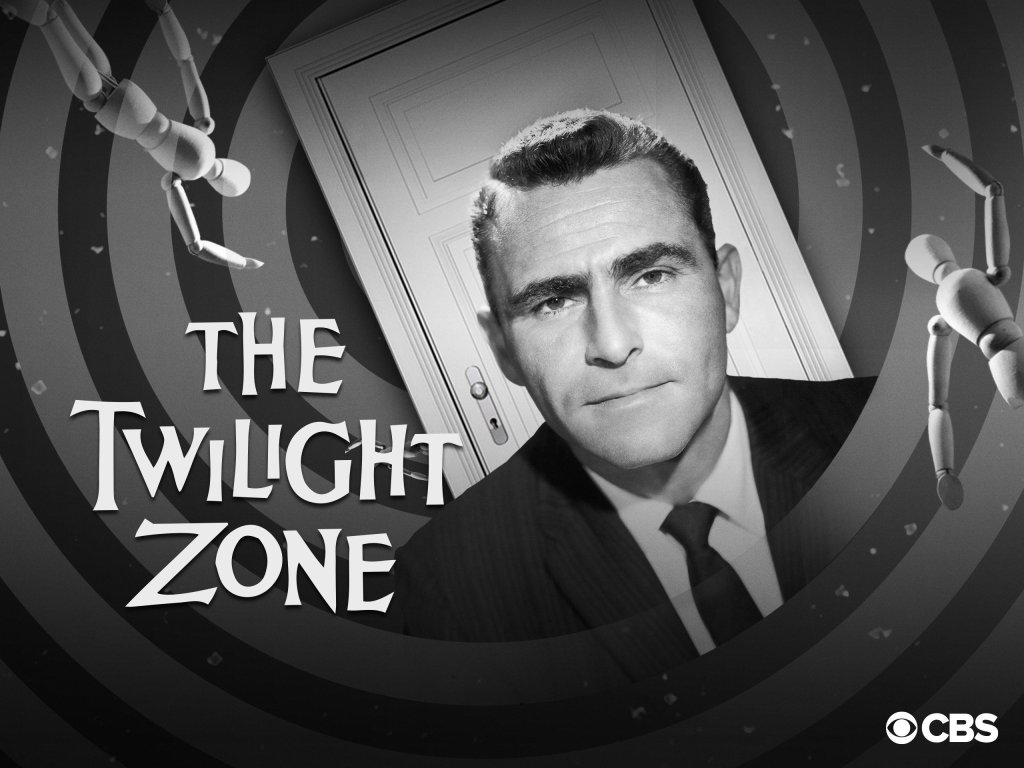
This is the premise of the very first episode of Rod Serling’s almost legendary series, The Twilight Zone (1959-1964).
Earl Holliman’s character, Mike Ferris, finds himself in precisely this predicament. And just to stir the pot a little, he can’t remember who he is.
Mike Ferris is taking part in an experiment in preparation for America’s future expedition to the moon. But this is the punchline. Oops! Spoiler.
His arrival in the town without people is a hallucination, produced by his loneliness after over 400 hundred hours alone. The argument is that we humans are tough, we have high aspirations and we’re willing to put ourselves through Hell to achieve them. But, there is a limit, a barrier against which we will eventually crash. We cannot endure loneliness – a theme that will come back in episode 7, The Lonely.
Holliman plays Ferris as a likeable, engaging guy. He is enthusiastic and open to making contact. Ultimately, this will be his downfall. A more reticent, introverted character may have lasted longer than even Ferris’ remarkable record.
This is a quality of story – they force us to suspend disbelief. We simply accept that Mike Ferris is in this situation and that his response is exactly how we would expect a human being to respond. There is, however, another quality, another possible response. The story should also force us to consider alternatives. This may well be a believable response for Mike Ferris, but should we merely accept that it applies wholesale? What are all the possible responses?
Of course, the answer is that there are as many possible responses as there are human beings!
We should never get so lulled into the story that we fail to recognise that it is only one possible scenario. We all scream at the screen when the heroine (usually) opens the door we, the audience, know she shouldn’t. The story must follow its own logic, but we needn’t be bound by it.
Read Mary Shelley’s Frankenstein and, right from the start, as the reader, you just know that Victor shouldn’t do what he is so bound to do. The logic of the story compels him forward – he has no option. We, on the other hand, do. This is at least one of the reasons we read or engage with stories – they help us realise that we always have options. Unfortunately, like Victor Frankenstein and Mike Ferris, when we find ourselves bound up in a given situation, we lose sight of the options that lie available to us.
That experience we have, as we read or watch, of recognising the options open to the protagonist is one of the lessons that engaging with a text should endow us with. No story is merely an entertainment. Even the lightest, popular fiction, forces us to realise that there are always options. The limitation of the character with whom we are engaged is that he or she doesn’t have the luxury of choosing differently. We, however, should take away the memory of knowing that, however caught up in the tension, excitement or danger, we recognised there were options, we know that if the character had just made a different choice, well, we’d be left with no story.
Imagine your life if you could watch it as a movie or an episode of a TV series, able to stand outside of the emotion of the situation and choose a path that didn’t lead you into the clutches of the serial killer, vampire, mad axeman or the office ethos that forces you to act in a way that ends in alcohol and embarrassment. This is what we do when watching; it is the lesson we need to incorporate into life.
So, what options does Mike Ferris have available to him?
Simply put, due precisely due to the personality that we find so engaging, he probably has very few. Mike Ferris is doomed to the breakdown that we witness on screen. The question is, are we doomed to the same fate?
If your only goal in life is to be outgoing, likeable and attractive to all, chances are you will be Ferrissed!
There are alternatives.
Speaking as an extreme introvert, whose personal record is four months on his own – with, admittedly, intermittent interaction (once a week while ordering a McDonalds) – I am bound to claim that loneliness would never be my downfall. I never feel lonely! Boredom, however, is another story. Four hundred hours with a few good books – Shelley’s Frankenstein being one of them – and I reckon I stand a chance of surviving without descending into Ferris’ nightmare.
There is, of course, a less facile alternative.
I do not identify with Mike Ferris. In all honesty, I don’t really get why he breaks down so profoundly. He has survived over four hundred hours alone. Why, in all that time, has he not learned how to manage his aloneness?
It comes down to the fact that he is forcing himself to do something that doesn’t come naturally. He is in an alien environment – this world in which he is the sole occupant. Eventually, it is bound to impinge upon his consciousness that this is not the way it is supposed to be. He is supposed to be with other people, for how does he know who he is without other people to constantly remind him? This is why we live in societies, why we are drawn to crowds, why the vast majority of human beings live in unbelievable poverty and inhumane conditions; because we always think it is better to be with others than by ourselves. When alone, we are confronted with the question of whether we actually like ourselves? Who is so comfortable with themself they can endure having no one against whom to measure their identity?
The simple truth of the matter is, very few of us ever actually encounter ourselves. Because we don’t really know who we are, we cannot survive without the distraction of others. A Mike Ferris who truly knows who he is wouldn’t feel the need to go looking for others. This is why we find him walking into town at the beginning of the episode. He is desperate! The town itself is symbolic of his breakdown. The story would have us believe that Ferris starts out sane and likeable but, the truth is, that he would not be walking into that town if he wasn’t already in the midst of his breakdown.
If only we took the opportunity to fold aloneness into the very fabric of our being, we’d better be able to survive those occasions when it is thrust upon us. It is a cliché to say that we all fear death but, to the same extent, we also fear ourselves. We fear having only ourself for company, because there is always the very real possibility that we don’t actually like ourselves, bore ourselves, have little in common with ourselves. How can we ever really expect to find any level of real happiness if our entire life is one subterfuge after another, all serving the purpose of keeping ourselves hidden from our awareness?
Mike Ferris is a likeable guy, he seeks only to connect with whoever might be around. He is friendly, outgoing, sociable. Desperate! And precisely because he possesses all those admirable qualities. Of course, there is no reason to think they are not admirable; only that they blind us to a reality seeking our attention, arms waving frantically, trying to attract our attention and failing only because we refuse to acknowledge that we have seen that it is our Self waving to ourselves.
There is no need to feel lonely. Yet, too many of us do.
Loneliness is a killer. It stalks us, waiting for that moment of vulnerability when it can safely, in a Bundyesque manner, make us vanish into a nightmare.
It begs the question why we are so reluctant to protect ourselves from this maniac killer? Especially, as we already possess all that we need to ensure our own safety.
 Mark with an X
Leave a comment