An article for the Pacific Standard from 2019 asks the question: Why is Hollywood so Liberal? This article, by Tom Jacobs, opens thus: “The worlds of movies, television, and theater are overwhelmingly populated by political liberals”. This claim is supported, as indeed Jacobs so supports it with an embedded link, by an article in the Jan 28,2018 edition of The New York Times which provides evidence of Hollywood’s liberal tendencies. Those areas of Los Angeles Country rich in the presence of Hollywood stars voted overwhelmingly for Hillary Clinton in the 2016 Presidential election, for instance, and donated many millions of dollars to the Democratic campaign. So, Hollywood is clearly an enclave of liberalism.
Jacobs is very likely correct in his assessment of Hollywood in so far as, in the USA, Liberal is one half of a two-party system; Conservative being the other. To identify as liberal, then, probably means being a supporter of the Democratic Party, the supposedly liberal half of the very narrow spectrum of political options available in the country. But does Hollywood’s being full of political liberals mean that we should fear being inundated with liberal propaganda through the films and TV that is produced there?
Well, hardly!
However, it isn’t immediately clear what definition of liberalism is employed by this political party. Unsurprisingly, in its 2016 Party Platform, there is a distinct Rawlsian bouquet to the liberalism espoused. Yet there is also the odd dash of vinegar just to keep the flavours interesting. For instance, in the section entitled “Protect Our Values”, the party claims that the world “will be more secure, stable, and peaceful when all people are able to reach their God-given potential”. There are two problems with this.
Firstly, God (certainly as He comes across in the Old Testament) isn’t exactly the poster boy for tolerance and inclusivity. Actually, God isn’t really a figure you want to be bringing into any discussion of liberalism: God said… and saw that it was good, irrespective of what anyone else might have been saying. Hardly a liberal view!
Secondly, if one’s potential is a gift from God, there is little scope for liberalism, for who is to say that my God-given potential doesn’t include a wee bit of genocide – a quality that God seems rather fond of?
Strangely enough, though, Hollywood does seem to buy into this very idea – that who we actually are is a matter of Providence or, even more accurately, Fate.
According to Theoi.com, the Moirai (Fates) “were the three goddesses of fate who personified the inescapable destiny of man”. Thus, Fate and Liberalism are not the most intimate of bedfellows. Yet, so-called ‘liberal’ Hollywood, time-after-time, has its heroes and heroines tied to a fate which determines much of their character arc.
The stated aim of Buffy the Vampire Slayer (1997-2003), according to creator Joss Whedon, was to subvert the stereotype of the blonde girl who, instead of going “into a dark alley and gets killed”, becomes, instead, “someone who was a hero”. Clearly, though, there is only so much subverting one can get away with in Hollywood for Buffy isn’t someone who finds it within herself to be a hero, she is merely fated to be so, for “in every generation there is a chosen one”. It is she “alone” who will stand against the “forces of darkness” because “[s]he is the slayer”. If, as Vasily Grossman has it in his novel Life and Fate, liberalism is the freedom to assert one’s “right to be different, to be special, to think, feel and live in his or her own way”, then Buffy Summers is as far from being a liberal character as it’s possible to get.
Nor is the opening voice-over to Buffy the Vampire Slayer entirely honest, for Buffy doesn’t, in any way, shape or form, stand alone. She has the Scooby Gang standing right along side her. Of course, having such companions isn’t strictly anti-liberal. Grossman accepts that “human groupings” are the means through which the individual fights for the above mentioned freedom, though he does warn that human beings have a tendency to make the “terrible, fateful error” of mistaking these groupings for the “very purpose of life and not simply a means to an end”. Not that Buffy makes this mistake, necessarily, but the mere presence of the Scooby Gang is indicative of her fate as prescribed by the laws of Hollywood which clearly state that there should be no such thing as a lone hero or heroine. Presumably, this would make them appear a tad anti-social. To off-set this suspicion, the “lone” hero must always have at least a side-kick through whom they are made to reveal a more caring, sharing side to their personality.
Even a TV show described as “cynical about government authority” and concerned with issues of “globalisation and homogeneity” can not really be held up as a liberal paradigm. The X Files has, as one of its two lead characters, Fox Mulder who, from the very heart of the beast, as an agent for the F.B.I., rails against “conventional wisdom” and refuses to “play by the book”. Yet, for all that, Fox Mulder is as fated as Buffy Summers. Traumatised by an event that occurred when he was twelve, Mulder’s whole adult life has been determined by the need to know “The Truth”. As he says himself, in the Pilot, “Nothing else matters to me”. Mulder may be different, even special, but he hardly gets to live his life his own way.
While it might appear that Fox Mulder does indeed live his life his own way – nobody, after all, forced him down into that basement where he found the X Files – things aren’t all they appear. As Darren Mooney, of them0vieblog.com, recognises, The X Files can “be read as a metaphor for a son raging against the world inherited from his father”. When we later learn that Mulder’s father was somehow mixed-up in the grand conspiracy at the show’s heart, we realise that maybe his choices weren’t so free after all. Mulder is fated to go after the truth.
This idea of being fated-by-our-genes goes beyond the borders of Hollywood.
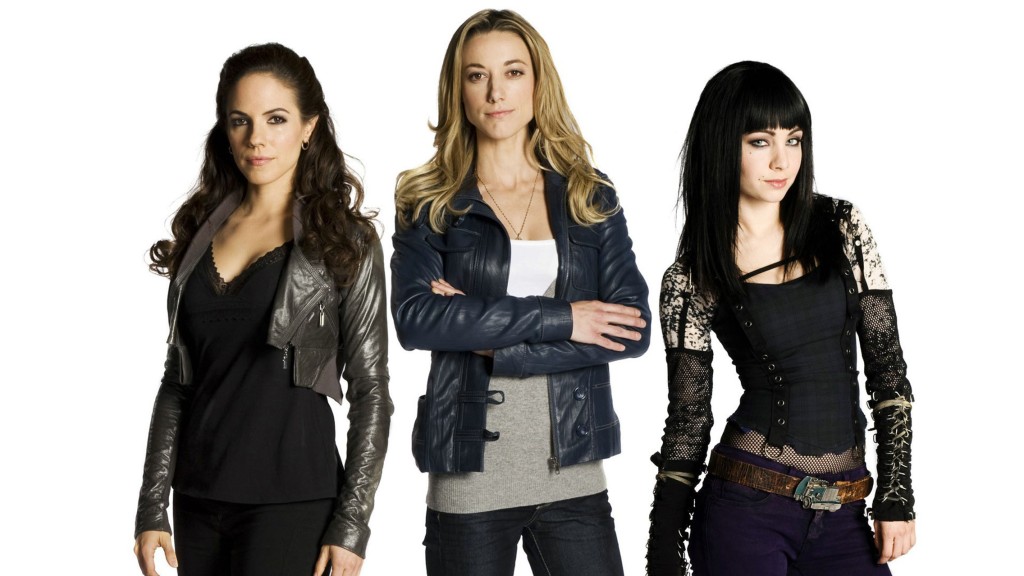
Lost Girl (2010-2016), produced in Canada, is a case in point. Each episode begins with the main character, Bo, telling us that “Life is hard when you don’t know who you are”. Okay, there are any number of mental ailments that prevent us from “knowing” who we are, but Bo doesn’t seem to be suffering from any of these. No, her reason for this lack of self-awareness is the absence of her parents; more specifically, her mother. As a consequence, Bo “was lost for years”, but constantly “searching while hiding”, until finally discovering that she “belong(s) to a world hidden from humans”. Upon this discovery, she decides that she “won’t hide anymore” but will “live the life I choose”. All to the liberal good, one might suppose. Except she spends the entirety of the first season not only seeking her mother but also asking others who or what she is.
According to Lost Girl, liberalism is defined as sex: sex without consequences, sex with whomever one pleases, and sex with others while building a special relationship. So defined, it is hardly surprising that Hollywood is prone to the odd sex scandal.
So, while Tom Jacobs may be perfectly right to say that Hollywood is full of liberals, it must be borne in mind that he is speaking of the real-life human beings otherwise known as actors, directors and scriptwriters and not about the product that La La Land churns out. Even liberals, it seems, especially those in pursuit of the all-mighty American dollar as, let’s face it, anything that comes out of Hollywood is, are capable of producing TV shows that consistently – almost exclusively – have very few liberals qua liberals as the main character. Very strange liberals indeed, who profess one thing, yet inflict quite another upon the TV audience.
 Mark with an X
Leave a comment